
53935 leans heavily Republican by roughly 42 points: about 29% of voters vote Democratic and 71% Republican.
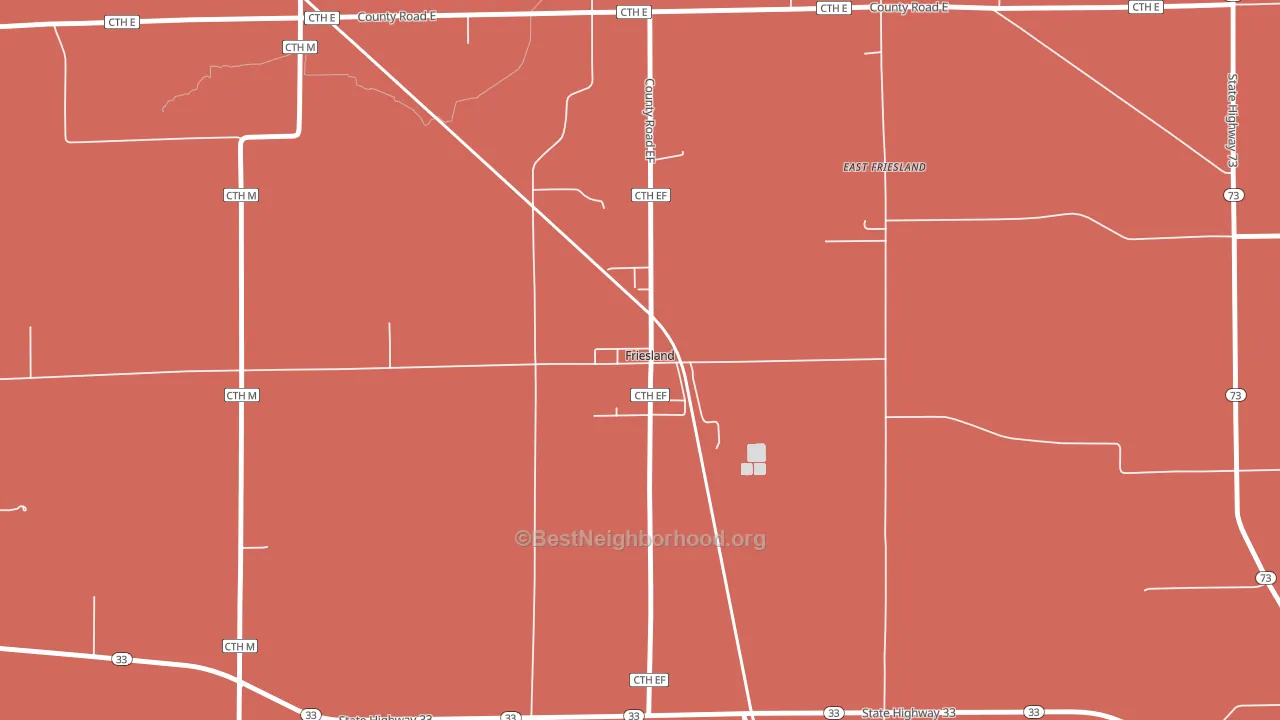
About 54% of adults in 53935 typically vote, below the U.S. average of about 62%. Among adults in 53935, ~16% vote Democratic, ~38% Republican, and ~46% don't vote. The map below shows estimated turnout by block group.
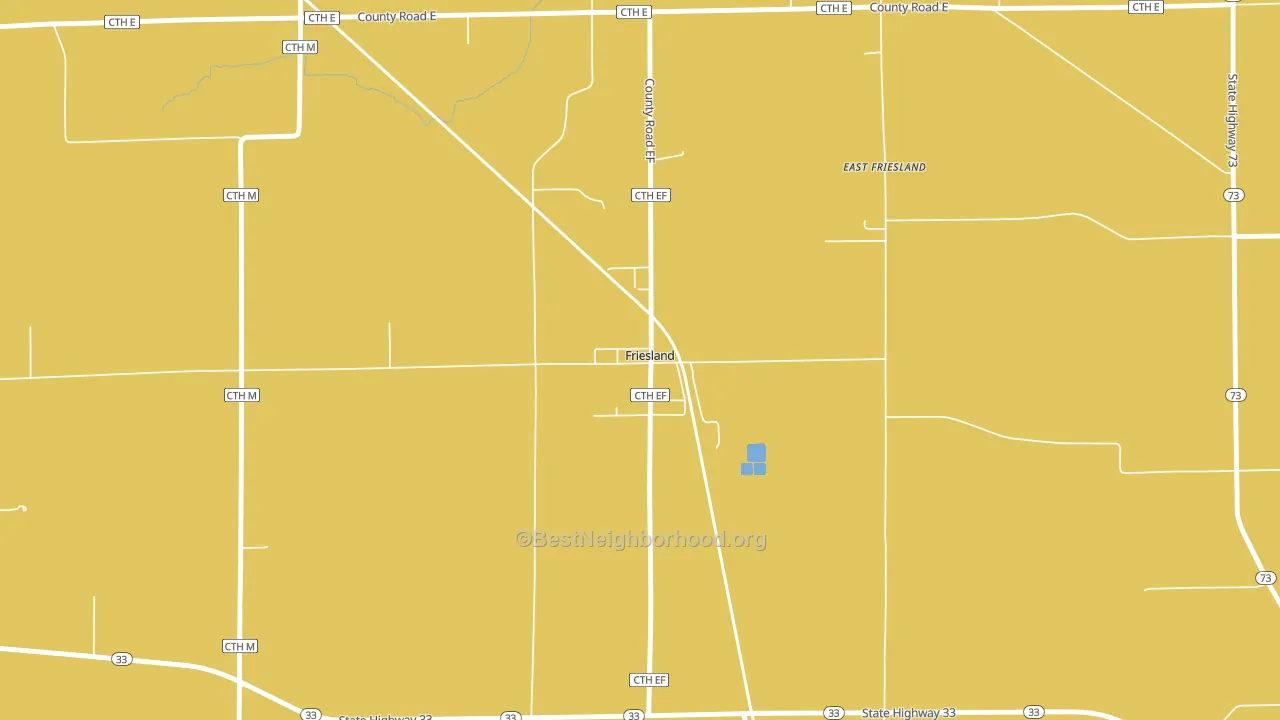
How 53935 compares
Among zip codes within 15 miles, 53935 leans more Republican than 9 of 14 neighbors.
53935 runs about 42 points more Republican than Wisconsin as a whole.
Why 53935 leans the way it does
This analysis examined 14,881 data points per zip code to find what predicts political lean and turnout. The items below are a few correlations that stood out for 53935, not a ranked or complete list of what matters most.
Areas with a high white share and below-average college attainment vote Republican. In 53935, about 93% of residents are non-Hispanic white, about 20 points above the U.S. average of 72%; about 17% of adults hold a bachelor's degree, about 10 points below the Wisconsin average of 26%.
Walkability and Republican lean
Places with a low walkability score tend to lean Republican; 53935, WI sits below the national average on this measure. A walkable street grid does not change how people vote; it mostly reflects how urban a place is.
Why turnout in 53935 looks the way it does
Crowded housing lines up with lower turnout. About 5% of homes in 53935 have more than one occupant per room, above 85% of zip codes. Learn more about the findings and methodology on the political spectrum map.
Nearby Zip Codes
Zip Codes with Similar Populations
Sources and methodology
Precinct-level voting records used to fit the model come from Wisconsin Elections Commission, distributed by the Voting and Election Science Team. Demographic inputs come from the U.S. Census Bureau (ACS 5-year estimates and the 2020 Decennial Census). Health and environmental inputs come from the CDC (PLACES and the Environmental Justice Index). Land cover comes from the USGS and EPA. Election-day and lead-up weather come from PRISM 4km daily grids and the NOAA Global Historical Climatology Network. Mail-voting and election-administration patterns come from the MIT Election Lab's Survey of the Performance of American Elections. Block-group crime detail comes from CrimeGrade. Internet data and modeling support provided by ISPreports.org.
Modeling and analysis by the BestNeighborhood data science team. Full methodology and findings: political spectrum map.
Methodology reviewed by the BestNeighborhood data team. Last updated May 2026.