
Delwood leans Republican by roughly 26 points: about 37% of voters vote Democratic and 63% Republican.
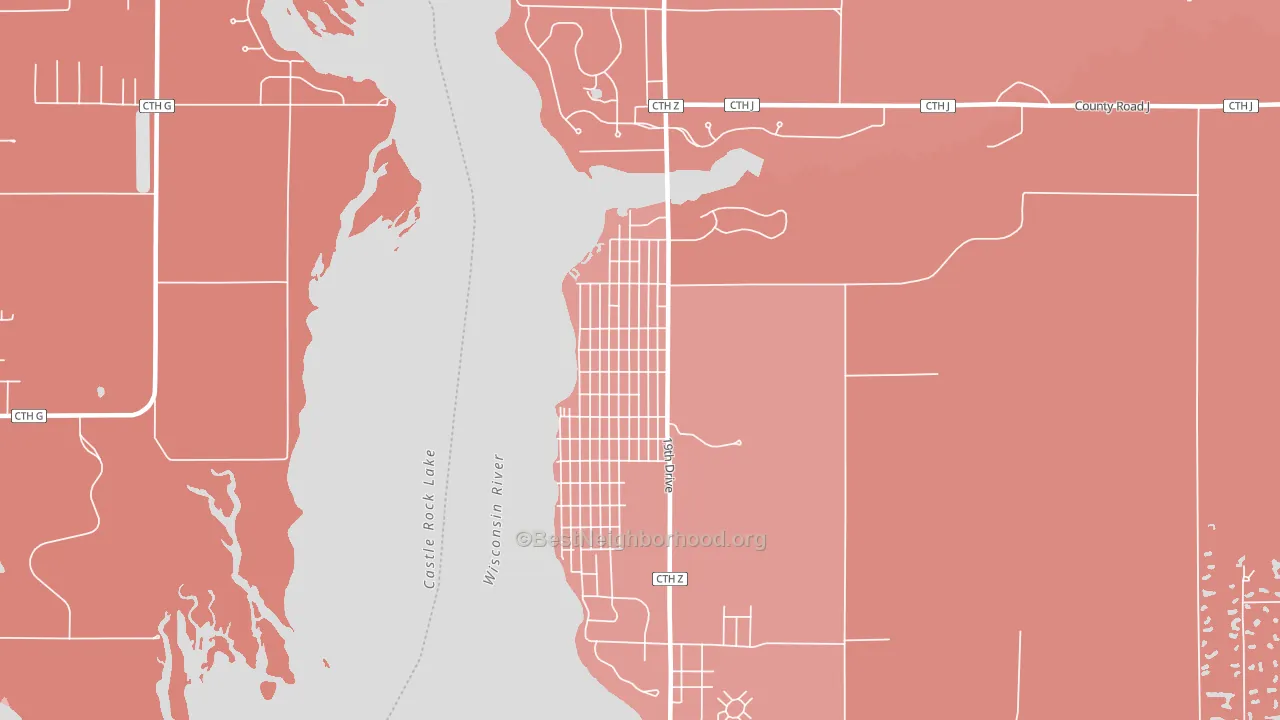
About 79% of adults in Delwood typically vote, above the U.S. average of about 62%. Among adults in Delwood, ~29% vote Democratic, ~50% Republican, and ~21% don't vote. The map below shows estimated turnout by block group.
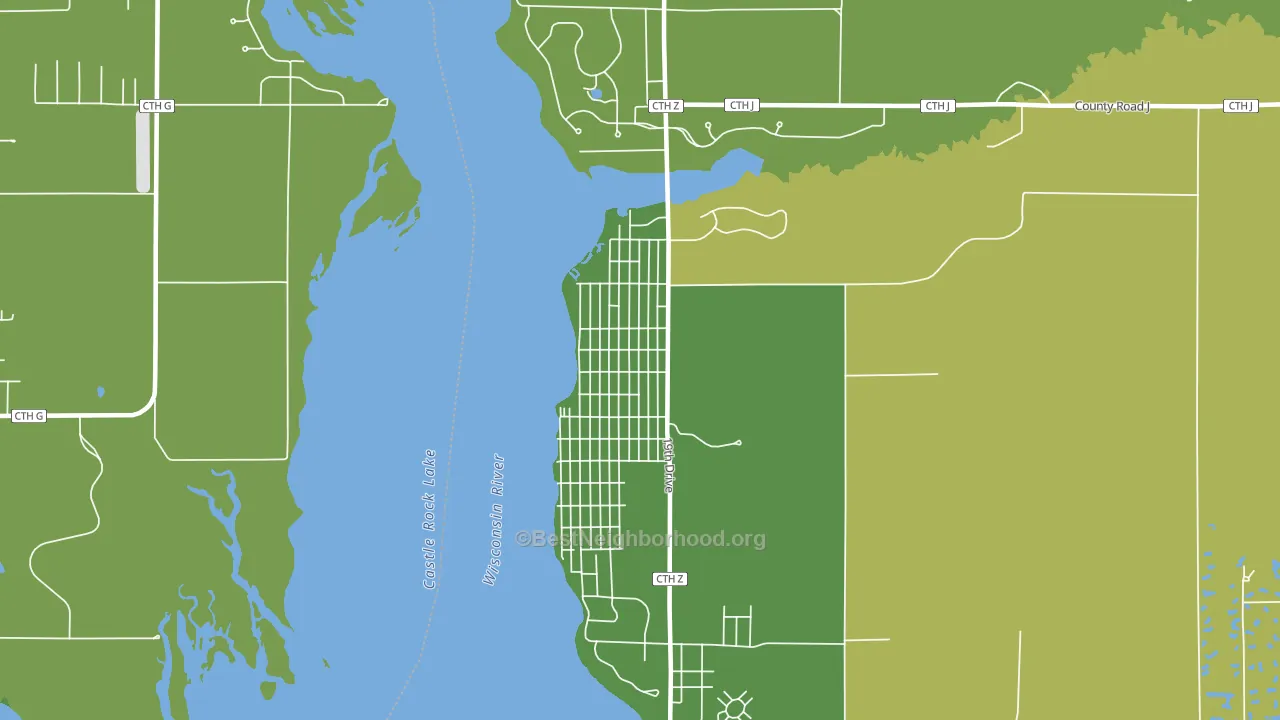
How Delwood compares
Among cities within 25 miles, Delwood leans more Republican than 6 of 38 neighbors.
Delwood runs about 26 points more Republican than Wisconsin as a whole.
Why Delwood leans the way it does
This analysis examined 14,881 data points per city to find what predicts political lean and turnout. The items below are a few correlations that stood out for Delwood, not a ranked or complete list of what matters most.
Areas with low college attainment vote Republican. About 9% of adults in Delwood hold a bachelor's degree, about 17 points below the Wisconsin average of 26%.
Renting and voter turnout
Places with homeowner-heavy households tend to turn out at a higher rate; Delwood, WI sits in the bottom tenth nationally on this measure.
Why turnout in Delwood looks the way it does
Homeowners vote more often than renters. About 94% of households in Delwood own their home, about 14 points above the Wisconsin average of 80%. Learn more about the findings and methodology on the political spectrum map.
Nearby Cities
- Dellwood, WI R+28
- Friendship, WI R+25
- Adams, WI R+24
- Arkdale, WI R+29
- Necedah, WI R+38
- Easton, WI R+30
- Union Center, WI R+36
- Monroe Center, WI R+28
- New Lisbon, WI R+29
- Brookside, WI R+31
Cities with Similar Populations
- Manila, MO R+65
- Jonesport, ME R+29
- Fontana, WI R+6
- Camden, WV R+65
- Center Hill, AR R+72
- Ascutney, VT D+22
- Elaine, AR D+17
- Hamden, NY R+19
- Sand Point, AK D+9
- Windsor, MA D+12
Sources and methodology
Precinct-level voting records used to fit the model come from Wisconsin Elections Commission, distributed by the Voting and Election Science Team. Demographic inputs come from the U.S. Census Bureau (ACS 5-year estimates and the 2020 Decennial Census). Health and environmental inputs come from the CDC (PLACES and the Environmental Justice Index). Land cover comes from the USGS and EPA. Election-day and lead-up weather come from PRISM 4km daily grids and the NOAA Global Historical Climatology Network. Mail-voting and election-administration patterns come from the MIT Election Lab's Survey of the Performance of American Elections. Block-group crime detail comes from CrimeGrade. Internet data and modeling support provided by ISPreports.org.
Modeling and analysis by the BestNeighborhood data science team. Full methodology and findings: political spectrum map.
Methodology reviewed by the BestNeighborhood data team. Last updated May 2026.