
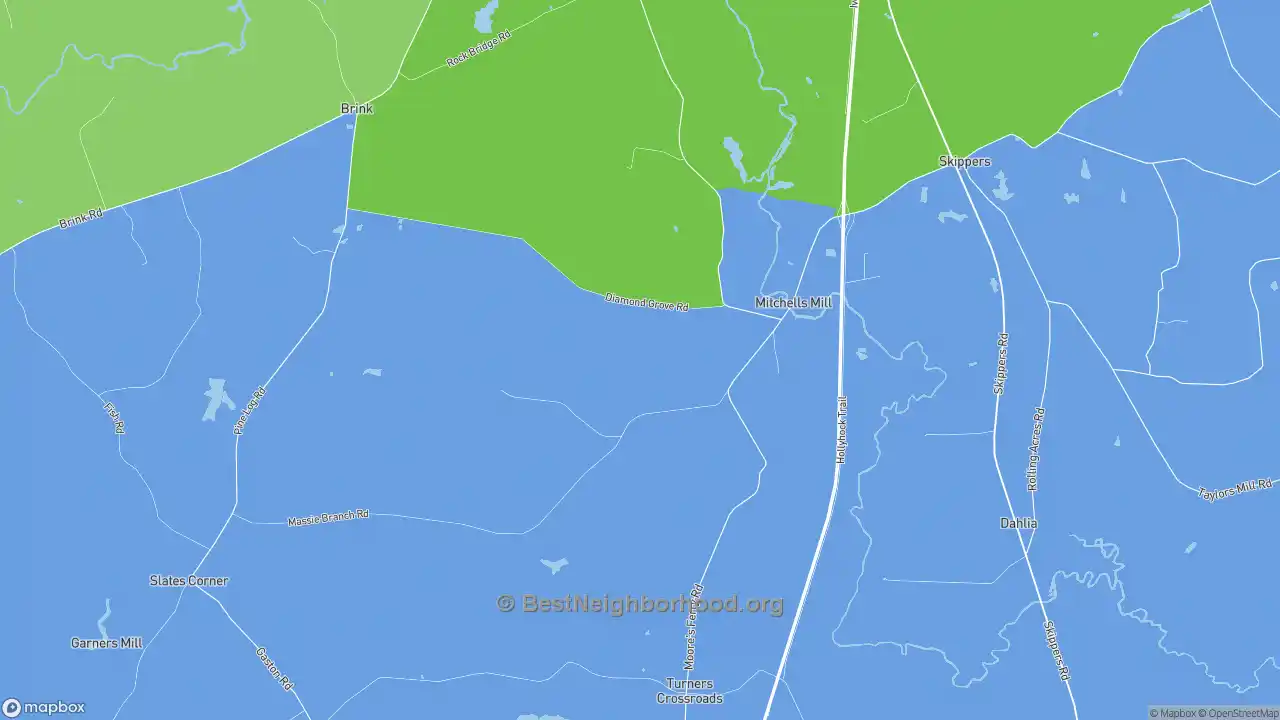
The map below shows majority race by area in 23879, as self-identified on the US census. Darker shades indicate a larger racial majority in that neighborhood. This page also contains data and maps on 23879 racial diversity and diversity scores. Click here to scroll to diversity data.
WhiteHispanicBlackAsianMultiple/Other
Majority race by area
The majority race in 23879 overall is black, making up 70.4% of residents. The next most-common racial group is white at 23.0%. There are more black people in the north areas of the zip. People who identify as white are most likely to be living in the east places. The data below shows how many people identify themselves as each of the following races, which most Americans base on their family's national origin:
Race in 23879
Self-Identified Race |
23879, VA Population |
|---|---|
White |
23.0% |
Hispanic |
1.8% |
Black |
70.4% |
Asian |
0.0% |
Native American |
0.0% |
Other |
4.9% |
Diversity and Diversity Scores for 23879, VA
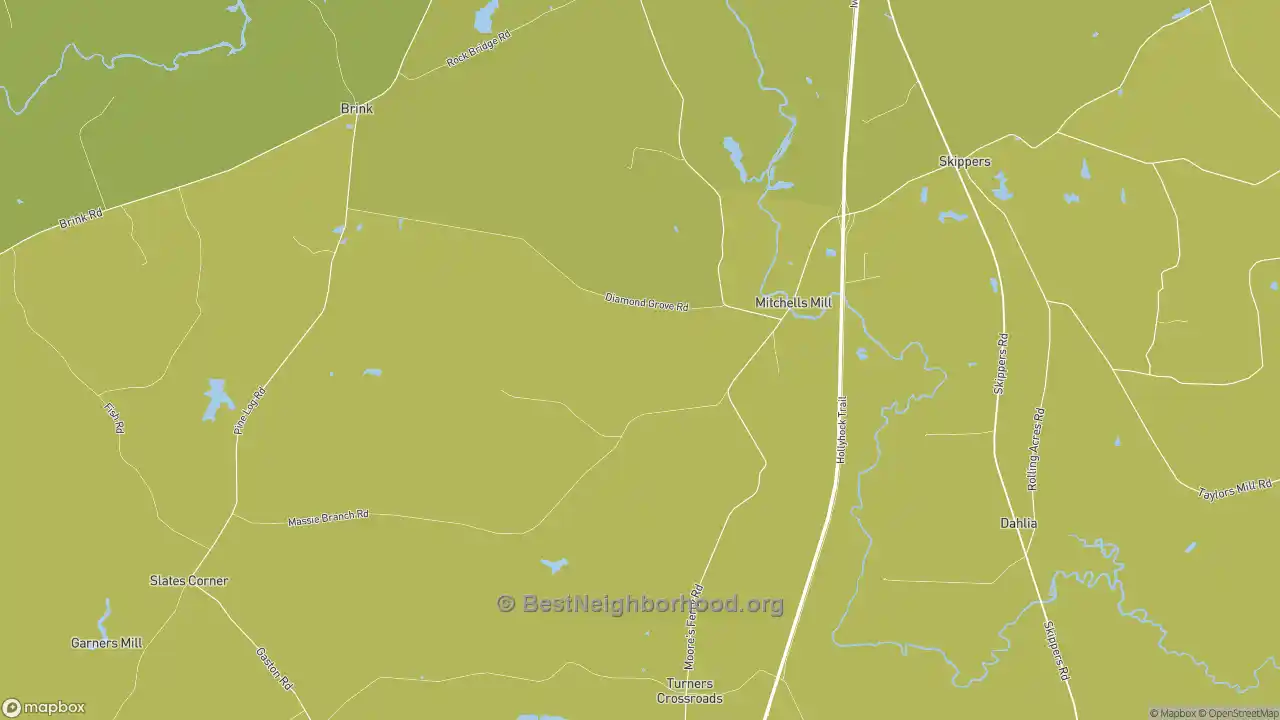
The map below shows diversity in 23879. Areas in green are more diverse, while areas in red are much less diverse. Diversity, in this case, means a mixture of people with different race and ethnicity living close to one another. For example, all-black and all-white areas in the zip would both be considered lacking diversity.
Less diverse
More diverse
Colorblind friendly
off
23879 Diversity Score
44.9
More diverse than 70% of US zip codes
23879 has a diversity score of 44.9: the chance, in percent, that two residents picked at random belong to different racial or ethnic groups, from ACS race counts. A place where everyone shares one group scores 0, and an even mix of the six groups in the chart above scores the maximum, 83.3. 23879 is more diverse than other US zip codes, more diverse than 70% of them. Within 23879's proper boundaries, the most diverse area is east 23879, and the least diverse areas are in north 23879.
Source: BestNeighborhood calculations from the U.S. Census Bureau, American Community Survey (ACS) 2020-2024 5-year estimates (race and Hispanic origin); proprietary data mapping and analysis. Special thanks to the University of Virginia.